Fundamental Role of Pharma Reactors in Pharmaceutical Manufacturing
Pharmaceutical reactors are at the heart of modern pharmaceutical production, enabling precise control over chemical reactions and the transformation of raw materials into high-value active pharmaceutical ingredients (APIs). These reactors provide the necessary environment to manage temperature pressure, maintain sterility, and ensure consistent residence time, critical factors for both safety and efficiency in the pharmaceutical industry.
The growing demand for sterile reactors reflects the industry’s focus on high-quality, reliable production systems capable of meeting regulatory standards. By carefully controlling reaction systems, pharmaceutical manufacturers can optimize yields, reduce waste, and enhance reproducibility, supporting both small-scale and industrial continuous process operations.
Sterility as a Critical Factor in Reactor Demand
Sterility is a non-negotiable aspect of pharmaceutical production. Contaminated reactors can compromise batches, jeopardize patient safety, and lead to costly recalls. Ensuring sterile conditions throughout the chemical process is essential, particularly for injectable APIs and sensitive biologics.
The market for sterile reactors has expanded as pharmaceutical companies increasingly require systems that maintain aseptic conditions, minimize contamination risk, and support compliance with Good Manufacturing Practices (GMP) and other international standards. Sterile reactors are not only a production asset but a strategic investment in operational integrity and product reliability.
Sterility Requirements and Impact on Pharmaceutical Production
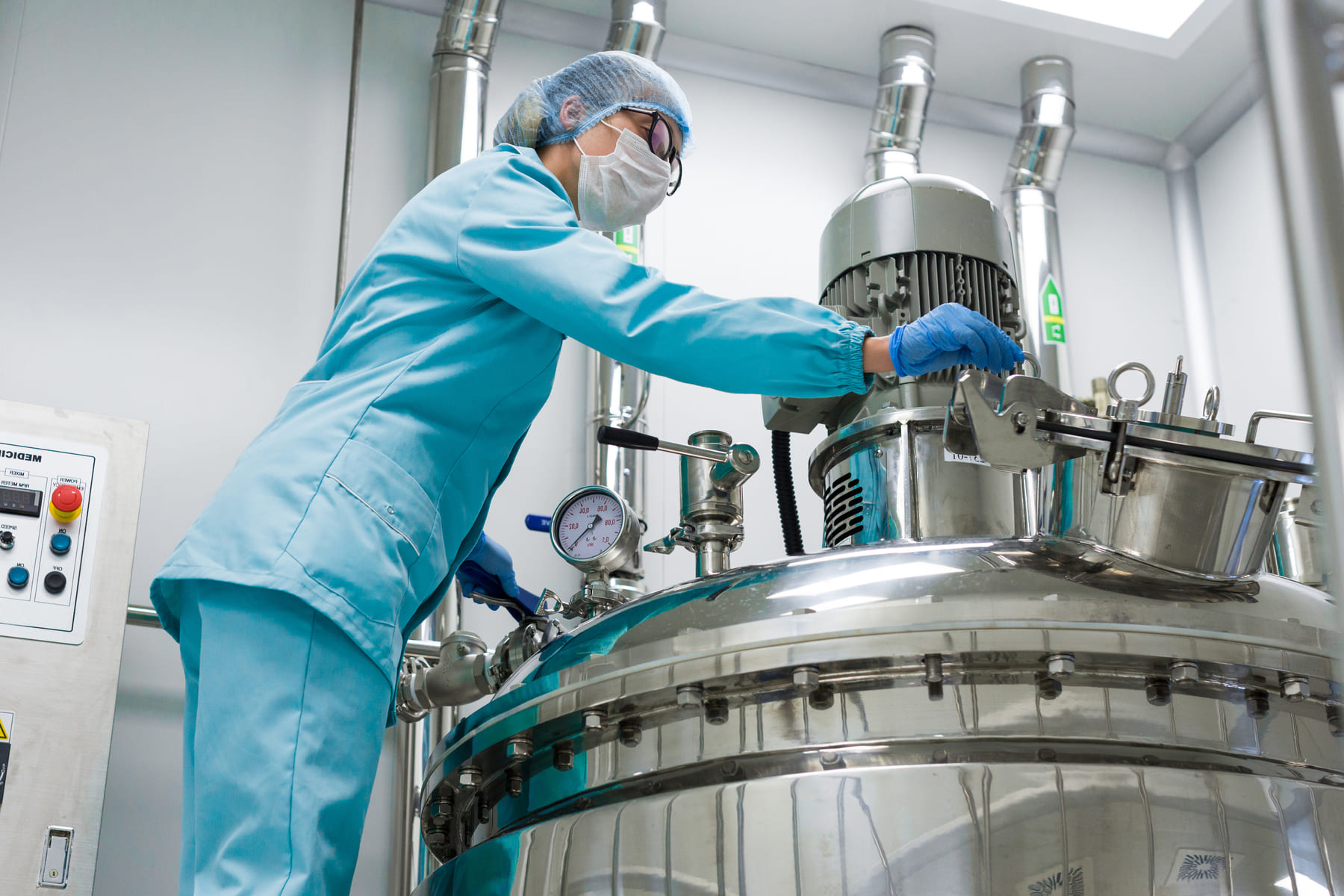
Strict sterility requirements play a crucial role in shaping the design, operation, and material selection of pharmaceutical reactors. Reactor systems must be fully compatible with CIP/SIP (Clean-in-Place / Steam-in-Place) procedures, ensuring that every component can be efficiently sterilized to prevent microbial contamination. These reactors are designed to withstand autoclaving or chemical sterilization agents, allowing continuous compliance with aseptic protocols and maintaining the integrity of sensitive raw materials throughout complex chemical reaction pathways.
In addition to safeguarding product quality, sterile reactor designs help reduce cross-contamination between batches, which is essential for high-value API production. By ensuring that reactors meet stringent sterility standards, pharmaceutical manufacturers can streamline regulatory approvals, maintain consistent product performance, and achieve reliable outcomes across both batch and continuous reaction systems, ultimately supporting operational efficiency and safety in the pharmaceutical industry.
Reactor Types and Their Process Applications
Continuous Flow Reactors (PFR, CSTR): Process Intensification
Continuous flow reactors, including plug flow reactors (PFR) and continuously stirred tank reactors (CSTR), are designed to maintain a steady chemical process under tightly controlled conditions. They allow for consistent residence time, efficient mixing, and precise temperature pressure management, making them suitable for large-scale pharmaceutical manufacturing where continuous production is essential.
- PFR: high conversion efficiency, minimal back-mixing, ideal for sequential reactions
- CSTR: uniform composition, precise control over temperature pressure, adaptable to multi-step reactions
- Reduced risk of contamination due to closed-loop design
- Supports automated monitoring of reactants and products
- Suitable for scale-up in continuous process pharmaceutical operations
Fixed Bed and Fluidized Bed Reactors: Specialized Catalytic Applications
Fixed bed reactors and fluidized bed reactors are widely used in catalytic reaction systems, where maximizing contact between catalysts and reactants and products is critical. Fixed beds provide stable catalyst placement, while fluidized beds enhance mass and heat transfer, optimizing reaction efficiency.
- Fixed bed: stable catalyst positioning, predictable reaction rates
- Fluidized bed: enhanced heat and mass transfer, uniform temperature pressure distribution
- Compatible with various raw materials
- Minimizes hot spots and degradation of sensitive reactants
- Suitable for high-volume or specialized pharmaceutical reactions
Batch Reactors: Operational Flexibility and High-Value API Production
Batch reactors offer flexibility for producing high-value APIs or specialized formulations. They are ideal when production requires careful control of chemical reactions in smaller volumes, enabling adjustments to temperature pressure and residence time for each batch.
- Handles diverse raw materials and complex formulations
- Allows controlled start and stop of reactions
- Supports CIP/SIP for sterile conditions
- Stainless steel or glass reactor construction for chemical compatibility
- Facilitates quality assurance and process validation
Hydrogenation Reactors
Hydrogenation reactors are specialized for reduction reactions in the pharmaceutical industry, often using asymmetric catalysts. They require precise control of temperature pressure and reaction kinetics to achieve high conversion rates and selectivity.
- Designed for selective hydrogenation reactions
- Allows parallel or sequential processing of reactants and products
- Optimized for both batch and continuous production
- Integrated safety systems for pressure and temperature monitoring
- Supports production of sensitive APIs under sterile conditions
Material Selection and Engineering Considerations for Sterile Reactors
Material selection is fundamental for reactor design, particularly when sterility is required. Stainless steel is the material of choice for most pharmaceutical reactors due to its corrosion resistance, durability, and ease of sterilization. In some cases, glass reactors are used for their chemical inertness and visibility of reaction progress.
Proper engineering ensures that reaction systems can withstand operational pressures and temperature pressure fluctuations without compromising integrity. Material choice also impacts cleaning, maintenance, and long-term performance, contributing to safe and reliable pharmaceutical production.
Thermal Management and Pressure Control Strategies
Effective thermal management and precise pressure control are critical for ensuring the performance and safety of pharmaceutical reactors. Uncontrolled temperature or pressure fluctuations can lead to reaction instability, reduced yields, or potential safety hazards. To address these challenges, modern reactors incorporate advanced control systems with automated sensors and feedback loops, enabling real-time monitoring of temperature pressure and maintaining optimal conditions for complex chemical reactions.
These systems are designed to provide comprehensive operational safety and efficiency. Integrated sensors allow continuous oversight, while automated regulation of temperature and pressure ensures consistent reaction kinetics. Redundant safety mechanisms prevent overpressure events, and optimized cooling or heating jackets promote uniform temperature distribution. These strategies are compatible with both continuous process and batch reactors, supporting diverse reaction systems in the pharmaceutical industry while maintaining high-quality outcomes.
Regulatory Compliance, FEA Certification, and Safety Standards
Meeting regulatory compliance is critical in the pharmaceutical industry, where reactors must adhere to GMP, ASME, EN-13445, and other international standards. Finite Element Analysis (FEA) certification ensures that reactor designs can safely withstand operational pressures and stresses. Compliance guarantees both product quality and safety during chemical reactions.
- Certified according to international industrial codes
- FEA analysis for mechanical integrity and pressure resistance
- Supports regulatory inspections and audits
- Ensures safe operation under extreme temperature pressure conditions
- Enhances reliability and lifespan of pharmaceutical reactors