What is FEA certification?
FEA certification refers to the official validation of proficiency in Finite Element Analysis (FEA), a computational technique used to simulate the physical behavior of components and structures under various conditions. The certification ensures that the individual or company is well-versed in applying FEA methods to predict how materials and designs will perform, particularly in high-stress, high-pressure environments.
For high-pressure equipment, such as pressure vessels and reactors, this certification is critical to ensuring safety, compliance with industry standards, and optimal design. FEA allows engineers to mathematically model and simulate real-world conditions, eliminating the need for extensive physical prototypes and reducing the risk of failure during operation.
Why is it important for high-pressure equipment?
High-pressure equipment operates under conditions that require precise engineering and testing to guarantee performance and safety. Without accurate simulations, there is a higher risk of costly errors, equipment failure, or even catastrophic consequences, particularly in critical sectors such as petrochemical, pharmaceutical, and energy industries.
FEA certification plays a crucial role in these industries by ensuring that the engineers involved in the design, analysis, and testing of high-pressure equipment are fully qualified to apply advanced simulation software and methodologies. This certification helps predict the real-world behavior of pressure vessels, reactors, and other equipment under extreme operational conditions, ensuring that they can safely withstand the pressures and stresses they will face during their lifecycle.
How FEA Simulates Real-World Conditions in High-Pressure Equipment
Finite Element Analysis (FEA) works by dividing a complex structure, like a pressure vessel, into smaller, simpler components called “elements.” Each element is then mathematically modeled to simulate how it will behave under various stressors, such as pressure, temperature changes, and mechanical forces. FEA simulation allows engineers to test these components under real-world conditions before building the actual physical prototype.
The results of these simulations provide insights into factors like material deformation, stress distribution, fatigue, and fluid dynamics, all of which are crucial for high-pressure equipment. By using FEA software, engineers can optimize the design, ensuring the structure can handle operational conditions such as high temperatures, pressure cycles, and corrosive environments.
Key benefits of FEA certification for high-pressure equipment
The adoption of FEA certification in the design and manufacturing of high-pressure equipment offers several significant advantages:
Planning in design for long-term operational efficiency
By incorporating FEA simulation early in the design phase, engineers can plan for long-term operational efficiency. This method allows for the identification of potential issues, such as areas where pressure or temperature fluctuations could cause excessive wear or failure. By addressing these concerns in the design phase, equipment can be optimized to ensure maximum efficiency throughout its entire lifespan.
Increased product reliability and performance with FEA
One of the primary benefits of FEA certification is the increased reliability and performance of the product. Through simulations, engineers can fine-tune the design of high-pressure equipment, ensuring that the final product performs reliably under a wide range of operational conditions. The ability to test and optimize before physical construction minimizes the risk of unexpected failures or suboptimal performance.
Finite Element Analysis in high-pressure vessel design
In high-pressure vessel design, Finite Element Analysis (FEA) is used extensively to ensure that the vessel can withstand the high stresses it will encounter. The simulation software enables engineers to model the effects of internal pressure, temperature variations, and external forces on the vessel’s walls, joints, and supports. By using FEA, the vessel’s design can be adjusted for optimal strength, durability, and resistance to fatigue, ensuring safety and efficiency during its operational life.
FEA allows for the detailed analysis of complex stress points that may not be immediately obvious, ensuring that every aspect of the design is accounted for and optimized. This helps reduce the need for expensive and time-consuming physical testing.
FEA certification standards and industry applications
Industries Using FEA Certification for High-Pressure Equipment
Several industries rely heavily on FEA certification for high-pressure equipment to ensure the safety, reliability, and efficiency of their operations. Some of the key industries include:
- Petrochemical and Oil & Gas: FEA plays a crucial role in designing and testing pressure vessels, pipelines, and reactors used in harsh environments where pressure and temperature variations are extreme. In these industries, FEA ensures that equipment can withstand the conditions of refining, chemical processing, and transportation.
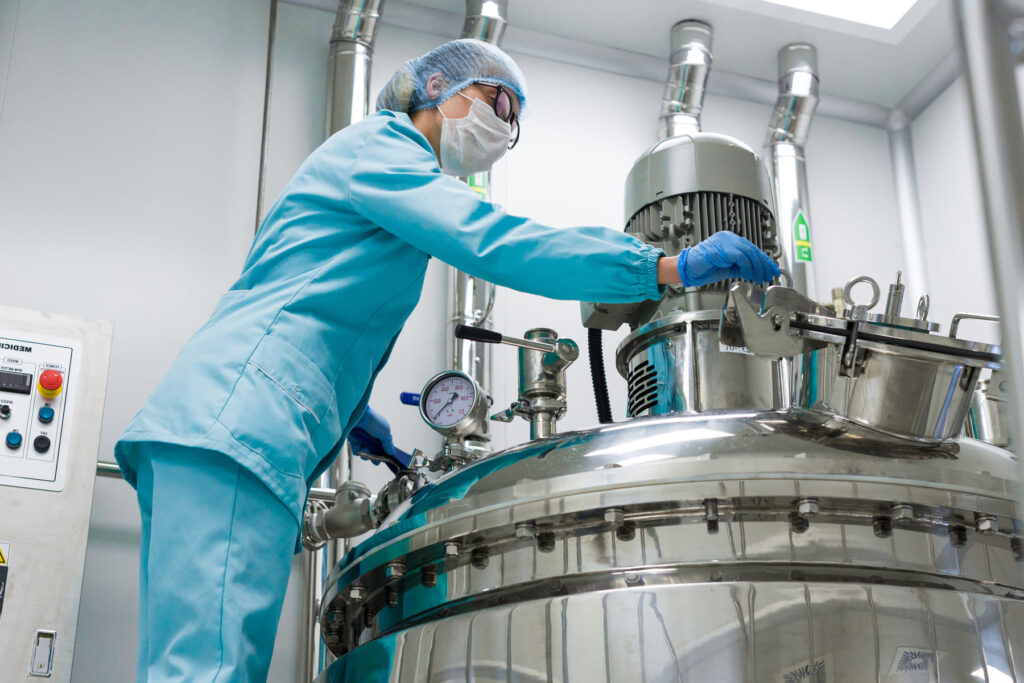
- Pharmaceuticals: For drug manufacturing processes that require high precision and safety, FEA is used to simulate the behavior of reactors, storage vessels, and distillation columns under controlled conditions, ensuring they can operate safely and efficiently without contamination.
- Energy (Nuclear, Power Generation): In the energy sector, particularly nuclear and power generation, FEA is used to design and optimize reactors, heat exchangers, and pressure vessels that handle extreme temperatures, pressure conditions, and potential hazards.
- Aerospace and Defense: FEA certification is also critical in designing equipment for aerospace and defense, where high-strength materials and precision are necessary to ensure the equipment can handle rigorous demands.
By ensuring compliance with industry standards, FEA certification helps manufacturers design equipment that not only meets regulatory requirements but also performs efficiently and safely in extreme environments.